

Javier Bassi
He studied under Pierre Fossey (1976) and José Montes (1984), at the Faculty of Architecture and Urbanism of the University of the Republic (UdelaR) (1985–1992), and at the National School of Fine Arts (1997) in Montevideo. In 1993, he traveled to Mexico, the United States, Europe, and North Africa, and received a scholarship from the United States Program in New York and Boston. In New York, he reunited with Gonzalo Fonseca. In 1995, he was invited to a workshop with Rubens Gerchman.
In 1996, he received the Prix Paul Cézanne from the French Ministry of Foreign Affairs and worked at the Atelier
Alraune in Rezé, with support from the Musée des Beaux-Arts de Nantes. He moved from France to New York and created paintings and monumental sculptures at the José Morales Studio in Manhattan, where he returned in 2000 and 2004.
He has participated in group projects and residencies in Amsterdam, Nantes, New York, Cuenca, and Montevideo.
He has exhibited since 1990, with 27 solo shows and more than 160 group exhibitions in 30 countries. He represented Uruguay
at the 5th International Painting Biennial of Cuenca, Ecuador; the 1st Mercosul Visual Arts Biennial, Porto
Alegre, Brazil; the 7th Havana Biennial, Cuba; and the 2nd Montevideo International Biennial.
He has won his country’s most prestigious art awards, including: First Prizes at the 6th National Exhibition of Young Visual Artists (1994), the Prix Paul Cézanne (1996), the Ministry of Foreign Affairs Salon (1997), the Municipal Salon (1998), 50th National Exhibition (2002), Bicentennial Mural Competition (2011), and Grand Prizes at: BROU Centennial Exhibition (1996), 1st Moscow Biennial (1999), and 8th Salto Biennial (2000).
He was invited to open the MUVA alongside works by Pedro Figari with a permanent solo exhibition
(1997). He received the Niveau Award at the 3rd Mail Art Biennale in Debrecen, Hungary (2010), and the FEFCA Creation Grant from the National Directorate of Culture of the Ministry of Education and Culture (MEC), Montevideo. (2012-2014). His most recent exhibitions include: the Juan Manuel Blanes Museum in Montevideo, the Art Museum of the Americas in Washington, the Archaeological Museum of Cartagena, Spain, SP-Arte with Galería de las Misiones in São Paulo, Brazil, and the UNAM Science Museum in Mexico City. His work encompasses paintings, objects, installations, sound experiments, urban interventions, artist books, texts, and various activities related to contemporary art and thought. His work is included in the collections of numerous museums and private collections.
Notable among these are: the IDB Institutional Collection and the National Gallery in Washington; the SKD
| Kupferstich-Kabinett Museum in Dresden, Germany; the FluxMuseum in Texas; and, in Uruguay, the Juan Manuel Blanes Museum
and the National Museum of Visual Arts.
THREE PERSPECTIVES IN DIALOGUE
“Art must be grounded in a structure; that structure is geometry.” Joaquín Torres García, Constructive Universalism, 1944. The exhibition is part of a central tradition in Uruguayan art, in which geometry is not merely a formal device, but a language capable of articulating thought, experience, and meaning.
The exhibition brings together three contemporary artists—Javier Bassi, Judith Estela Britez Di Sano, and Lizzy Magariños—whose careers, though diverse, share a common interest: exploring the possibilities of geometric language as a space for creation.
Torresgarcia’s legacy is not presented here as a literal reference, but rather as a common thread shared by the three artists. The idea that geometry can be a spiritual language, that structure can contain meaning, and that a work of art can function as a field of relationships between matter, sign, and thought runs through the works of the artists featured in this exhibition in various ways.
In this context, Javier Bassi’s work plays a central role.
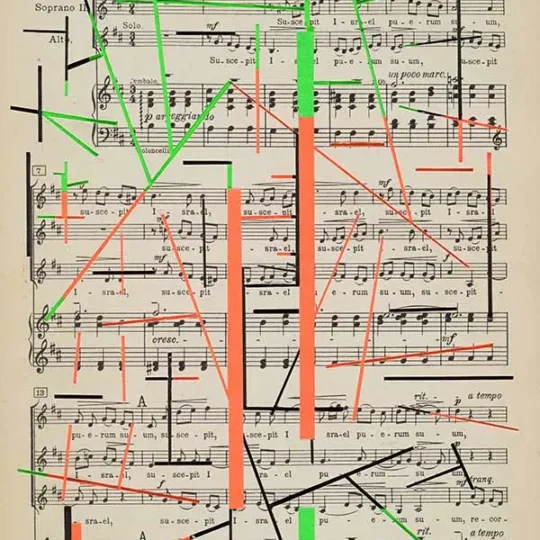
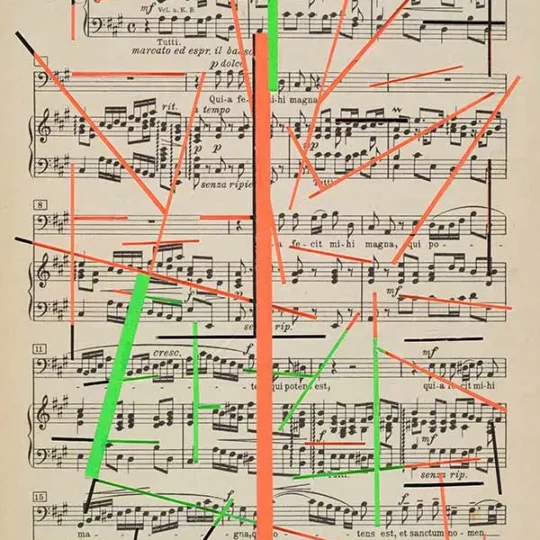
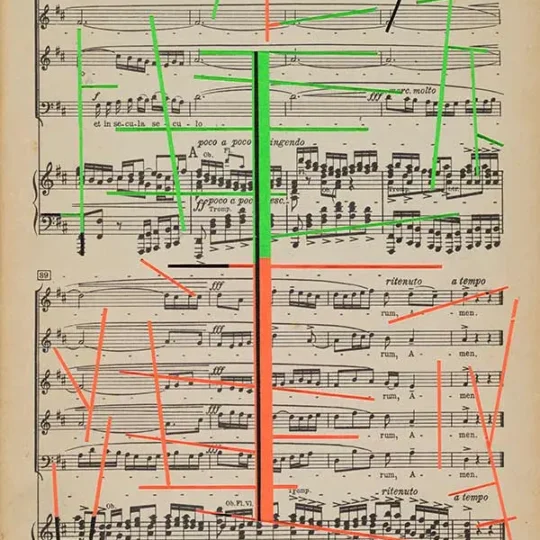
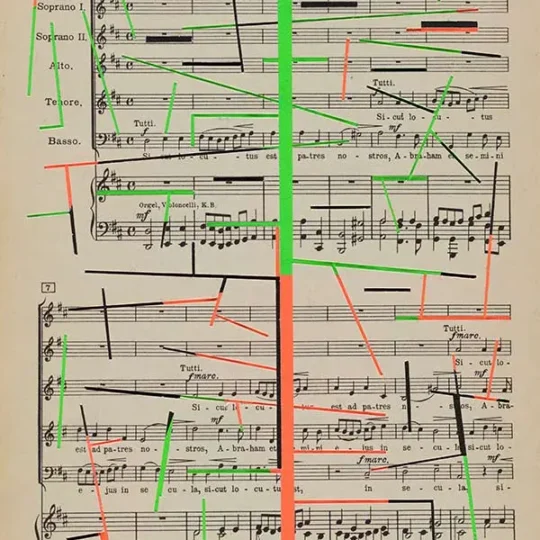
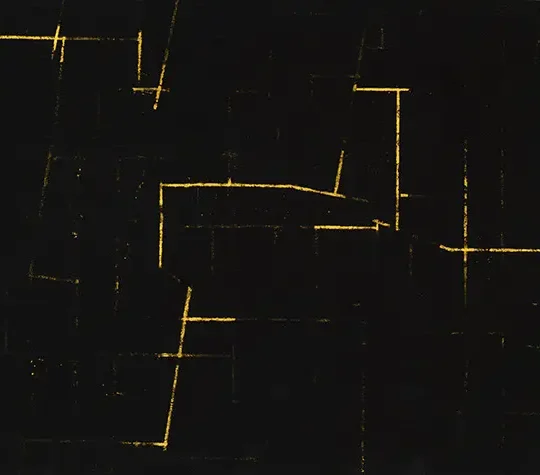
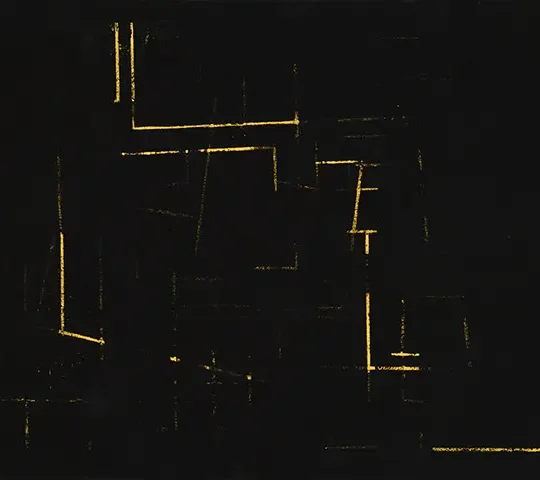
His practice, developed over decades through academic studies and stays in various countries, is characterized by rigorous research into the relationship between form, silence, and thought.
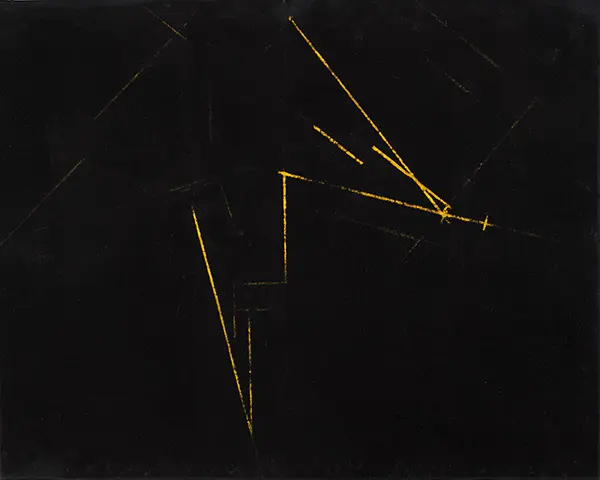
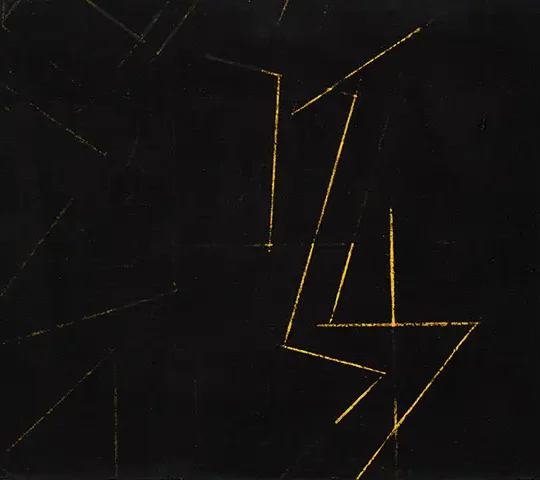
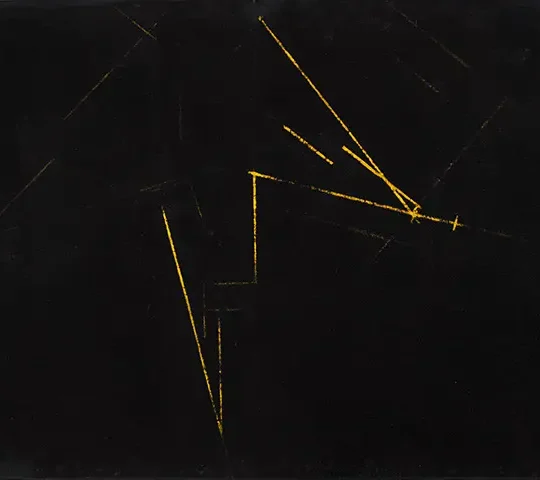
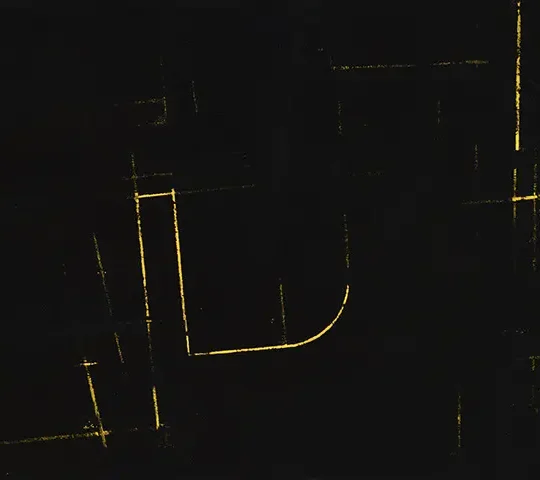
Through an extreme reduction of color, in which black stands out against white or yellow surfaces, his works draw attention to the materiality of the medium and the spatial arrangement.
When black is applied to light surfaces, structures emerge in which the dark pigment is removed; as a result, the gray we perceive does not stem from a mixture of colors, but rather from an optical effect produced by the interplay between the black pattern, the surface, and the viewer’s distance. In this interplay between presence and absence, the work becomes a field of tension between order and chance, memory and experience.
Giulia Ampollini
Leave a Reply